Search Results
MyPosterGuard.com

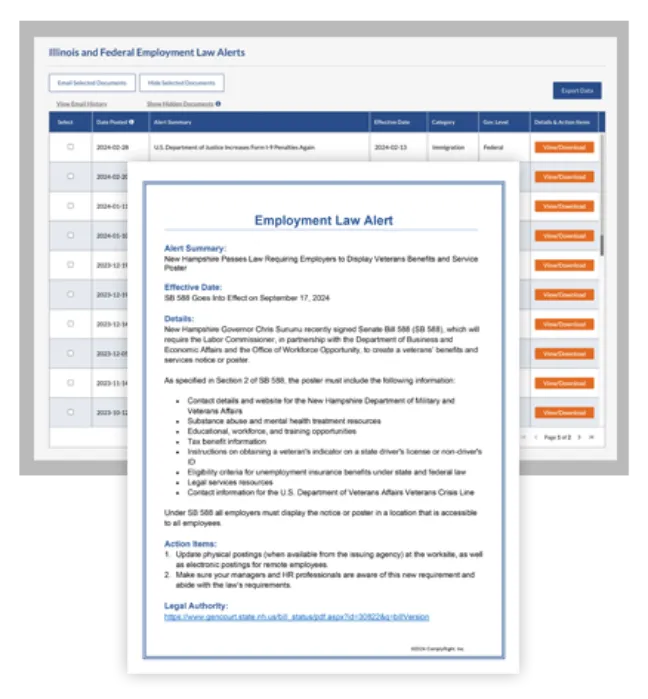
Labor Law Updates

Washington Governor Signs Immigrant Worker Protection Act

Washington Governor Bob Ferguson recently signed the Immigrant Worker Protection Act into law (HB 2105). The Act aims to protect immigrant workers by requiring employers to provide notice to their employees when federal agencies conduct inspections related to employment eligibility verification, specifically concerning Form I-9.

Read More
Disability Discrimination Cases Are on the Rise: Is Your ADA Compliance Putting You at Risk?

Disability discrimination is one of the fastest-growing areas of enforcement by the Equal Employment Opportunity Commission (EEOC). In fiscal year 2024, the EEOC received more than 33,688 disability discrimination charges and secured nearly $700 million for victims, a 5% increase over the previous year. 

Read More
Congress Moves to Expand Veterans Benefits Awareness in the Workplace

Veterans are entitled to a wide range of benefits and resources through their service — but accessing those benefits often depends on knowing they exist in the first place.

That's the driving idea behind the Thomas M. Conway Veterans Access to Resources in the Workplace Act, a newly introduced bipartisan bill that would require employers to display information connecting veterans with the federal and state benefits available to them.

Read More
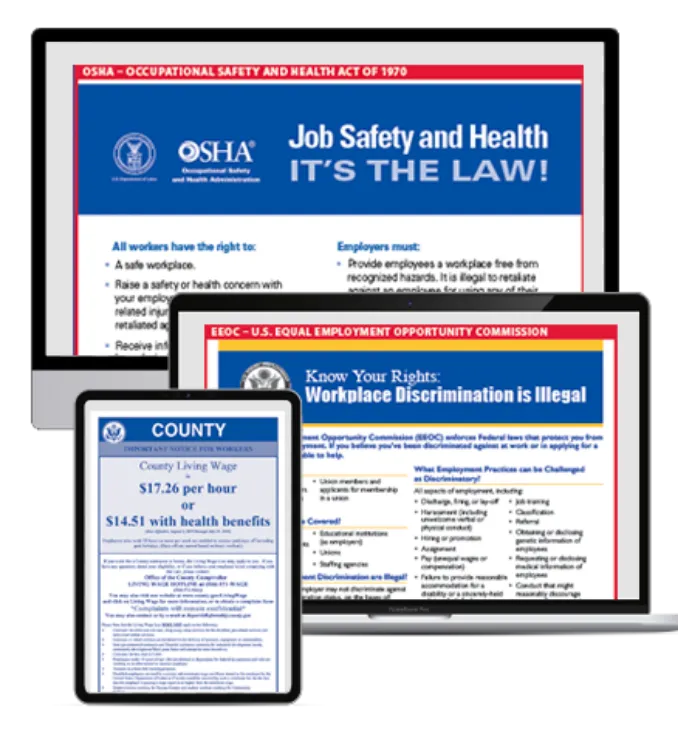
OSHA Releases Updated Poster - Employers Do Not Need to Replace Previous Versions

On March 3, 2026 the Occupational Safety and Health Administration (OSHA) has released an updated version of its poster that informs employees of their rights under the Occupational Safety and Health Act of 1970. The new poster has been simplified and reformatted.

OSHA has confirmed, employers are not required to replace existing posters. Current versions remain fully compliant and may continue to be displayed.

Read More
Workers’ Comp for Remote Employees: Compliance Risks and Employer Responsibilities

The workers’ compensation system was created to provide benefits to employees who suffer a work-related injury or illness. As remote and hybrid work arrangements continue to evolve, many employers are surprised to learn that workers’ comp obligations do not stop at the office door. In most cases, remote employees are covered under the same state laws as on-site staff.

Read More
What Employers Need to Know About New DE&I Regulations in 2026

Diversity, equity and inclusion efforts are entering a more complex phase. In 2026, new DE&I regulations, court decisions and enforcement priorities will change how employers approach DE&I. For HR leaders and business owners, the question is no longer whether DE&I matters, but how to implement it effectively while staying compliant.

Read More
Department of Labor Announces Federal Contractor Minimum Wage for 2026

On February 9, 2026, the U.S. Department of Labor’s Wage and Hour Division will announce the applicable minimum wage rates for workers performing work on or in connection with federal contracts covered by Executive Order 13658. These rates apply beginning May 11, 2026, to certain federal contracts entered into between January 1, 2015 and January 29, 2022, that were not renewed or extended on or after January 30, 2022.

Read More
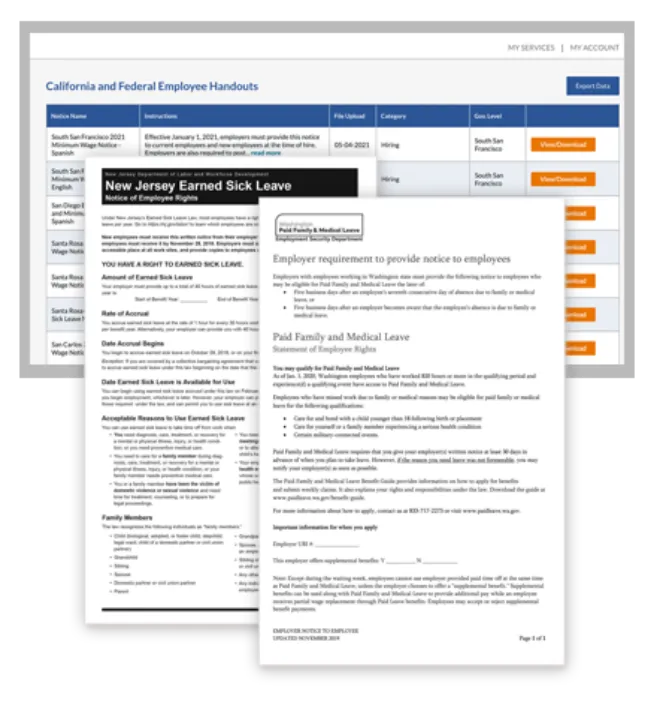
How to Keep Up with Mandatory Employee Handouts and Compliance Rules

You’re likely familiar with the labor law posters required in your workplace, but those postings represent only one piece of today’s compliance puzzle. Employers are also responsible for distributing mandatory employee handouts directly to employees — often triggered by specific events, policies or workforce changes.

Read More
5 Key Labor Law Trends Impacting the Workplace in 2026

HR professionals face a rapidly evolving compliance landscape in 2026, shaped by new regulations, heightened enforcement and growing expectations for transparency and ethical practices. Staying ahead requires awareness, adaptability and the ability to turn complex rules into practical policies that protect both employees and the organization.

Read More
Labor Law Posting Changes Never Slow Down — and Staying Current Matters More Than Ever

How often do labor law posters change? More often than many employers realize Labor law posting requirements are constantly in motion. New laws, revised regulations and shifting workplace environments can create compliance changes at any time, often without warning. Staying compliant means monitoring updates year-round and acting quickly when changes take effect.

Read More
Where to Get Labor Law Posters — And Why Your Workers’ Comp Provider Isn’t Enough

If you rely on your workers’ comp insurance provider for labor law posters, you could be setting your organization up for a costly mistake. Many carriers offer a few basic notices at no cost, but they don’t cover the full range of federal, state and local requirements. That gap exposes businesses to significant poster compliance risks and fines — including government penalties and increased legal liability.

Read More
How to Satisfy Labor Law Posting Obligations in a Hybrid Workplace

Remote work isn’t going away. Even as some teams return onsite, hybrid arrangements have become a permanent part of the workplace. This shift brings new compliance responsibilities, particularly around ensuring consistent access to labor law postings for all employees, regardless of location.

Read More
Training Managers on Poster Compliance: Why It Matters More Than You Think

Keeping up with workplace compliance isn’t just a responsibility for HR — it’s a shared effort across every level of management. While most employers know labor law posters are required, many underestimate how vital it is for managers to understand the details.

Read More
Ask the Attorney: Answering Your Questions About Your Responsibilities Under the FMLA

Lillian Chavez, Esq., who heads the expert legal team behind Poster Guard Plus™ , answers a variety of questions about the complex laws surrounding the Family and Medical Leave Act (FMLA).

Read More
Protect Clients, Simplify Compliance and Boost Revenue with Poster Guard Plus™

For PEOs, compliance isn’t a sideline responsibility — it’s central to client trust and retention. With labor laws changing constantly, clients spanning multiple jurisdictions and hybrid work creating new layers of complexity, even the most capable teams face mounting pressure to stay ahead.

Read More
​​​​​​​​​​​​​​​​​​​​​​​​​​​​​​​​​​​​​​​​​A Federal EEOC Update — Plus State-Specific Minimum Wage and Paid Leave Labor Law Changes — to Impact Postings in 2025/2026

The pace of labor law posting changes isn’t slowing down. In fact, the next 15 months promise a wave of updates that will impact workplaces nationwide. From a closely watched EEOC revision to sweeping paid family and medical leave programs and rising minimum wages, employers should be prepared for a busy compliance season.

Read More
Stay Vigilant with Mandatory Workplace Postings to Avoid Higher Fines and Legal Risks

As of September 30, 2025, the penalty for failing to post the EEOC 'Know Your Rights: Workplace Discrimination is Illegal' posting will increase to $698. The U.S. Equal Employment Opportunity Commission (EEOC) announced the increase today in the Federal Register.

Read More
Foreign Language Labor Law Postings: Federal, State and Local Rules You Can’t Afford to Miss

Workplaces today are more diverse than ever, and labor law postings are designed to keep all employees informed of their rights. That’s why employers can’t assume English-only posters are enough. In fact, nearly half of all states require certain labor law postings in English and Spanish — regardless of whether every employee on staff speaks English.

Read More
EEOC to Release Updated Workplace Poster

The U.S. Equal Employment Opportunity Commission (EEOC) recently stated that the Know Your Rights: Workplace Discrimination is Illegal poster will be revised due to several executive orders issued by the president. While the official release date has not yet been announced, employers should prepare to replace existing posters once the updated poster becomes available.

Read More
Is Your Business Among the 30+ States Requiring Human Trafficking Posters?

Awareness and education are key components in the fight against human trafficking. In recent years, many states, along with a handful of smaller jurisdictions and the federal government, have taken steps to increase awareness by requiring the display of human trafficking posters in certain businesses.

Read More
The New Rules of Scheduling: What Fair Workweek Laws Mean for Employers

Employers across the country are facing a new wave of rules that could reshape how they schedule and manage hourly workers. Fair workweek regulations — also known as predictive scheduling laws — are no longer just a buzzword in HR circles. 

Read More
State AI Employment Laws Are Growing Fast — Is Your Approach to AI-Assisted Hiring Keeping Up?

Artificial intelligence (AI) is rapidly transformed the modern workplace — from recruiting and AI hiring tools that screen resumes in microseconds, to algorithm-driven performance reviews and employee monitoring systems. But with this AI landscape comes growing concerns about fairness, transparency and individual privacy.

Read More
Hiring Minors? Stay Compliant with Teen Labor Laws and FLSA Rules

Hiring teens for after-school, summer, or part-time jobs can be a great way to build your team — but it also comes with legal responsibilities. The federal Fair Labor Standards Act (FLSA), along with state-specific child labor laws, sets clear guidelines around hiring minors.

Read More
The 8 Top Labor Law Poster Oversights Putting Small Businesses at Risk

Labor law compliance is more complicated than many small businesses realize — especially when it comes to workplace posting requirements. While some employers may be unaware of all the federal, state and local rules, others assume that hanging a few posters in the breakroom once a year is enough.

Read More
FAQs About Possible Exemptions with Labor Law Posting Requirements

Are labor law posters required? It’s a question that comes up a lot with certain businesses, where they assume they’re exempt from the requirements. This Q&A article addresses a handful of possible scenarios, and whether or not workplace postings still apply.

Read More
Spokane, WA Passes Ordinance to Curb Hiring Discrimination Based on Address

On April 21, 2025, the Spokane City Council passed a new ordinance that could signal a shift in how job applications are handled across the country. Known as “Ban the Address,” this law prohibits certain employers from asking for a job applicant’s home address during the early stages of hiring.

Read More
From Sick Days to Self-Care: How Paid Sick Leave Laws Are Evolving in 2025

Paid sick leave laws are continuing to gain ground across the country, with more states and localities stepping up to protect employees in the absence of a federal mandate. These laws not only provide crucial time off for health-related needs but also come with specific employer obligations, including mandatory postings and employee notifications.

Read More
Managing Weapons in the Workplace as State Laws Evolve

As a responsible business owner, maintaining a safe, productive workplace is essential - but rising concerns about violence have prompted many employers to revisit their policies, especially regarding weapons. Because federal law does not directly address firearms in private workplaces, employers must rely on state-specific laws to understand what’s allowed and how to remain compliant.

Read More
Be Aware: E-Verify Posting Law in Illinois Could Signal a National Trend in State-Level Compliance

Employers who participate in E-Verify are already familiar with the system’s role in confirming employment eligibility, but what’s often overlooked are the accompanying compliance responsibilities. One of the most basic, and increasingly important, obligations is the proper display of E-Verify posters in the workplace. And with Illinois introducing new posting and procedural requirements in 2025, it’s clear that the compliance landscape is evolving.

Read More
Significant Changes to Federal Contractor Wage and Posting Rules Could Impact Your Compliance

Recent presidential action has significantly altered key workplace rules for federal contractors — specifically, those related to minimum wage requirements and pay transparency. These changes not only affect how employers manage compensation and hiring practices but also have implications for workplace posting obligations.

Read More
Job Applicant Postings: A Compliance Requirement Too Many Businesses Overlook

Most employers know they must display labor law posters for employees, but many don’t realize certain postings must also be visible to job applicants. In fact, of the six mandatory federal postings, four must be accessible to applicants. Nearly half of U.S. states and several cities also require location-specific job applicant notices.

Read More
From Minimum to Living Wage: How Compensation Standards Affect Your Business

When discussing employee pay, the terms minimum wage, prevailing wage and living wage are often used interchangeably — but they mean very different things. Understanding the distinction is essential, especially if you're an employer navigating complex wage requirements across states, cities or industries.

Read More
Workplace Privacy Laws Are Changing – Here's What Employers Need to Know

As technology becomes more integrated into everyday work life, workplace privacy concerns are increasing. Employers now face growing legal obligations on how they collect, use and store employee information, especially regarding electronic...

Read More
The Changing Landscape of Workplace Postings: Which 5 States Are Leading the Charge?

Navigating state, county, and city-level regulations adds complexity to posting compliance. While federal posting requirements are minimal, many states now require multiple postings — and the pace of legislative change is accelerating. Staying current is more crucial than ever.

In this post, we’ll cover the five states with the most significant updates, what these changes mean for employers, and how to stay compliant as laws evolve.

Read More
Examining Wage Transparency Laws: What Employers Need to Know About the Growing Trend

The demand for fair, competitive pay is ever-present for employers. And today, expanding salary transparency laws are giving job candidates and current employees a distinct advantage.  Depending on the states and cities in which your business operates, you may be legally required to disclose salary information under new wage transparency laws. Learn why these laws are growing and how to uphold them in your hiring and promotion practices.

Read More
Anti-DEI Executive Orders Under Fire: Key Takeaways for Employers

The legal battle over workplace DEI programs has reached a critical moment. A federal court has temporarily blocked key provisions of the Trump administration’s executive orders restricting diversity, equity and inclusion (DEI) efforts in the public and private sectors. On February 21, 2025, U.S. District Judge Adam B. Abelson granted a preliminary injunction, ruling that the orders are likely unconstitutional due to vague language and restrictions on speech.

Read More
Unlock the Full Potential of AI: 5 Key Steps for Successful Workforce Integration

As artificial intelligence (AI) continues to transform industries, integrating it into your workforce strategy is becoming increasingly important. According to a report in CFO Magazine, 71% of C-suite leaders consider AI a high or medium priority for their businesses. However, adopting AI requires more than just enthusiasm — it involves planning and understanding.

Sharlyn Lauby, SHRM-SCP, author, speaker and the mind behind HR Bartender, offers key insights into how organizations can leverage AI effectively in their workforce strategies.

Read More
Essential Bilingual Labor Law Posters Every Employer Needs to Stay Compliant

When it comes to labor law posting compliance, many employers mistakenly overlook bilingual labor law posters. Or they assume foreign language requirements don’t impact their business because their entire workforce speaks English (or only a few employees speak another language, such as Spanish).

Read More
5 Employment Law Trends That Could Impact Your Business in 2025

As 2025 unfolds, employers must stay ahead of evolving employment laws to ensure compliance and protect their workforce. Here are five key trends shaping the employment law landscape this year, along with insights on what they mean for businesses.

Read More
From Hefty Penalties to Damaging Employee Lawsuits: Recognize and Prevent the Risks of Inadequate Workplace Poster Compliance

With all the labor law issues you must navigate as an employer, you may wonder if workplace poster compliance is that big a deal. Who’s even checking if you’re displaying these postings?

Read More
Federal Court Blocks FLSA Overtime Rule

On November 15, 2024, the U.S. District Court for the Eastern District of Texas vacated the Department of Labor’s (DOL) final rule raising the salary thresholds for being exempt from overtime under the Fair Labor Standards Act. The ruling applies nationwide and means that employers do not need to increase employee salaries in January 2025 to maintain their exempt status. It also vacates the July 1, 2024 increase. The court held that each of the three components of the rule exceeded the DOL’s statutory authority under the FLSA.

Read More
Do You Need to Give Employees Paid Time Off to Vote? Check Your State Laws

If an employee asks for time off to vote in the upcoming election, do you know what your legal obligations are? As a responsible employer, you certainly want to encourage employees to exercise their constitutional right to vote. And as a law-abiding employer, you also want to be aware of any state-specific laws that require you to provide time off from work to vote.

Read More
Pay Data Collection is Back on the Radar: 5 Tips to Help You Prepare

The Equal Employment Opportunity Commission (EEOC) is gearing up to resume collecting pay data from employers, marking a significant shift that could impact businesses of all sizes. To help you stay ahead of these changes, let's explore what this means for your organization and how you can prepare effectively.

Read More
Finding Qualified Job Candidates: 10 Traits to Consider for Better Hiring

Attracting qualified job applicants is only half the battle in securing top-notch employees. You also need to recognize the traits that differentiate average candidates from outstanding candidates.

Read More
As Workplace Dynamics Shift, So Should Your Employee Handbook: 5 Trending Policies to Consider

Company policies help you set rules and parameters with employees, as well as protect you legally. But too many employers have a “set it and forget it” mentality with their employee handbook, which isn’t smart during these changing times.

Read More
Hair’s the Deal: 20+ States Now Ban Natural Hair Discrimination (and the List is Growing)

An individual’s hair is a very personal matter and, increasingly, a protected characteristic in the workplace. Nationwide, states are tackling the issue head-on and passing laws banning race-based hair discrimination in the workplace.

Read More
What You Need to Know About Employee Handout Requirements & Your Compliance Responsibilities

Having up-to-date labor law posters is important, but it's just part of the picture when it comes to workplace compliance. U.S. employers also need to provide specific legal notifications, known as employee handouts, to keep employees informed of their rights and responsibilities.

Read More
FMLA in Action: 8 Real-World Examples to Keep Your Company Compliant

In most cases, the decision to approve or deny an employee’s request for time off is straightforward. Does the employee have available PTO? Did they follow established procedures, such as giving proper advance notice? Will other employees be available to cover the work?

Read More

Get Free
Posting Updates

Filters
Sort
display