The legislative and regulatory landscape has shifted dramatically — and for HR teams, the question is no longer whether to adapt, but how quickly. The decisions made in 2025 are impacting HR compliance in 2026, and what worked before may not hold up today. Understanding what changed, and why, is the first step toward protecting your business going forward.
Executive Orders and Their Reach Into the Workplace
In 2025, President Trump issued more than 200 executive orders — the most in 50 years. For many employers, these developments directly affect everyday workplace operations, touching everything from hiring practices to compliance obligations.
Three orders have dominated the conversation among HR professionals, and understanding them is essential for staying ahead in 2026:
- EO 14173 — Ending Illegal Discrimination and Restoring Merit-Based Opportunity
This order reframes how civil rights laws are interpreted and enforced at the federal level, with an emphasis on merit-based decision-making over group-based preferences. It prompted the Department of Justice to establish a Civil Rights Fraud Initiative, indicating that diversity practices perceived as quota-driven or preferential are no longer acceptable.
- EO 14168 — Defending Women from Gender Ideology Extremism and Restoring Biological Truth
This order formally establishes the federal government's position that there are two biological sexes. It marks a clear departure from federal approaches to gender-related workplace policies — and sits in direct tension with protections that exist at the state level in many parts of the country.
- EO 14151 — Ending Radical and Wasteful Government DEI Programs and Preferencing
Federal contractors face the most direct exposure here, as this order requires certification of compliance. Beyond government contractors, it also requires reevaluation of DEI programs across post-secondary institutions and healthcare organizations that receive federal funding.
Understanding what employment laws changed in 2025 requires more than reading the text of these orders. It's about thinking through the downstream effects, including how these orders bump up against your state's existing laws, any collective bargaining agreements you're working within, and workplace policies that have been in place for years. That analysis is now an essential part of strategic HR planning in 2026.
U.S. Supreme Court Decision: Ames v. Ohio Department of Youth Services
Executive orders weren't the only force reshaping the employment landscape in 2025.
On June 5, 2025, the Supreme Court issued a unanimous decision in Ames v. Ohio Department of Youth Services that fundamentally changed how workplace discrimination claims are analyzed. The case centered on Marlean Ames, a heterosexual woman who alleged she was passed over for a promotion — and subsequently demoted — in favor of gay colleagues. Lower courts had dismissed her claim, holding that majority-group plaintiffs must clear a higher evidentiary bar by demonstrating “background circumstances” suggesting their employer discriminates against majority-group workers.
The Supreme Court rejected that framework entirely. Writing for a unanimous court, Justice Jackson held that Title VII of the Civil Rights Act does not allow courts to impose a heightened evidentiary burden based on a plaintiff’s group identity.
What Employers Need to Understand
The Ames decision equalizes the rules in Title VII claims — and the implications are far-reaching:
- Every employee is now a potential claimant. The extra evidentiary hurdle that some courts previously required of majority-group employees is gone. A broader group of workers now has a clearer path to filing a discrimination claim, regardless of their background or group identity.
- DEI programs are under a brighter spotlight. This ruling arrived in the middle of an already heated national debate about diversity initiatives. In a separate written opinion, Justice Thomas flagged that overly rigid DEI programs can themselves become a source of discrimination claims — a factor employers shouldn't ignore.
- Training assumptions no longer hold. If your current training is built around protecting minority-group employees, that framing is now legally outdated. Every employee, regardless of background or seniority, can now experience discrimination and bring a claim.
2025 was a turning point for employment law. The decisions made that year are already shaping HR compliance in 2026.
Federal Agencies and Enforcement Priorities
Executive orders and Supreme Court decisions make the headlines, but it's the federal agencies that determine what compliance looks like on the ground. In 2025 and into 2026, all three major labor and employment agencies have undergone notable changes in focus and approach.
- Equal Employment Opportunity Commission (EEOC) — The EEOC has expanded its attention on religious discrimination and antisemitism. For EEOC enforcement in 2026, priorities signal heightened scrutiny on religious accommodation requests and hostile work environment claims.
- U.S. Department of Labor (DOL) — The DOL has returned to traditional compliance tools — including opinion letters — that give employers a more predictable path forward. Fair Labor Standards Act (FLSA) compliance is under increased scrutiny, with enforcement ramping up in hospitality, construction and healthcare, particularly around wage and hour issues.
- National Labor Relations Board (NLRB) — After operating short-staffed for much of 2025, the NLRB restored its full board membership in December and is expected to move fast. A backlog of unresolved labor issues is being addressed, with potential policy changes on the horizon around union representation, employer speech, workplace meetings and work rules.
Strategic Steps for Employers in 2026
By now it's clear that managing HR compliance in 2026 means staying ahead of it, not playing catch-up. Here's where to start — and what your organization can't afford to overlook in the coming months:
- Review and update HR policies. Examine your employee handbook, hiring protocols and disciplinary procedures through the lens of the new executive orders and the Ames decision. Workplace rules that treat majority- and minority-group employees differently — even with good intent — may now create legal risk.
- Conduct a DEI program checkup. Give your DEI practices a fresh look. If something considers group membership — whether it's a hiring practice, a training program or an internal initiative — make sure you can clearly explain why it exists and document it accordingly.
- Monitor agency enforcement activity. Pay attention to what the agencies are saying and doing. The EEOC, DOL and NLRB regularly signal their priorities through guidance documents, press releases and enforcement actions — and today’s enforcement priorities are often tomorrow’s audit risks.
- Revisit discrimination and harassment training. Following the Ames ruling, every training module that treats discrimination as something that only happens to minority-group employees is legally outdated. Update content to reflect that all employees have equal Title VII protections and equal responsibilities in your workplace.
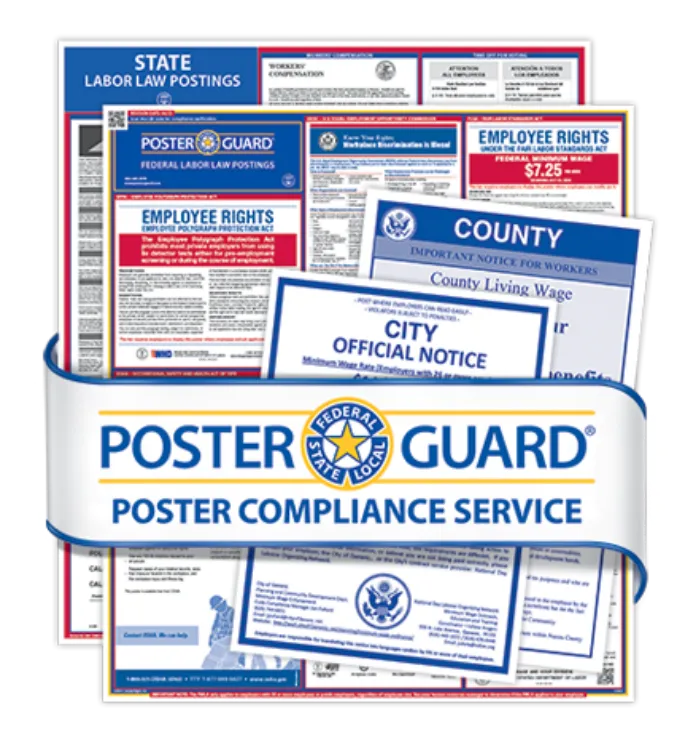
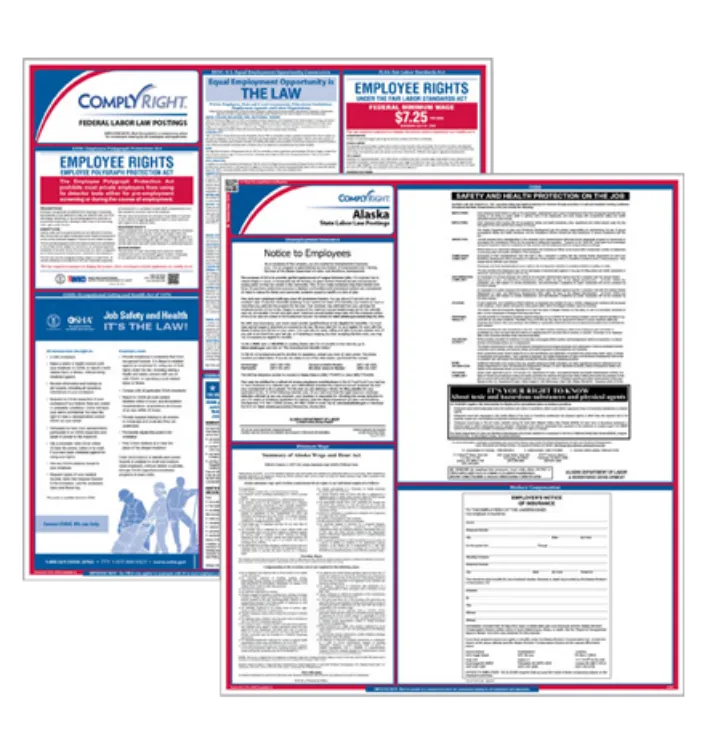
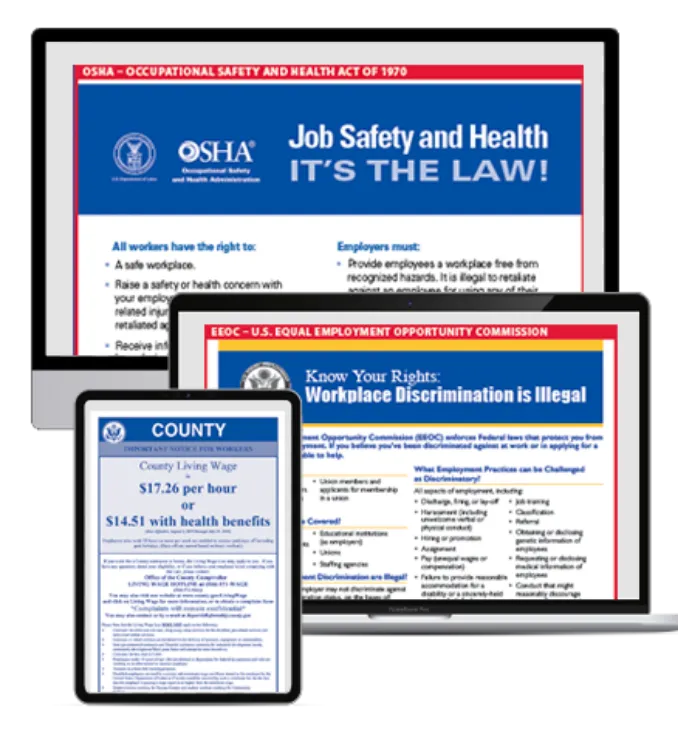
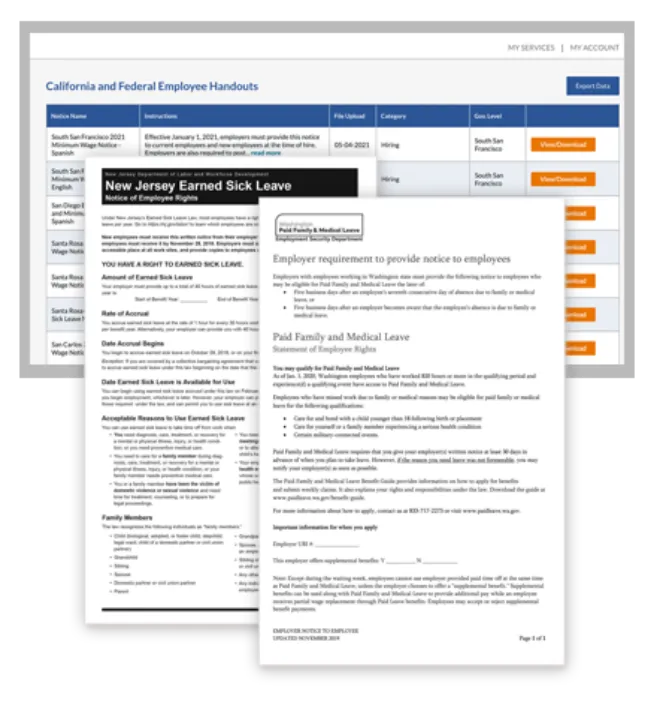
- Maintain poster and notice compliance. Federal, state and local workplace posting requirements keep pace with legal changes. A missed or outdated posting is one of the simplest and most easily avoided compliance oversights.
Keep Current with Our Employment Law Alert Service
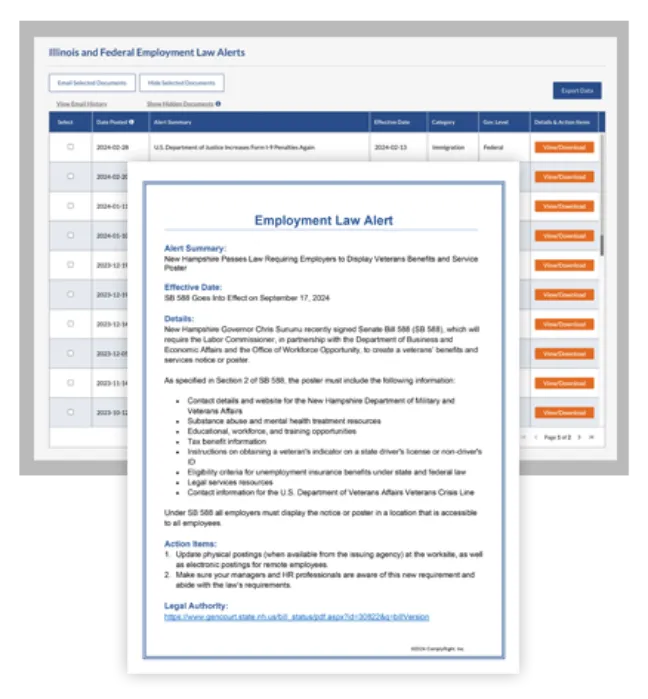
Evolving employment laws won’t wait while you’re busy running a business. Our Employment Law Alert Service delivers real-time updates on legal and regulatory developments, agency enforcement activity and workplace posting changes — so you’re never caught off guard. Subscribe now for a full year of legal monitoring and immediate email alerts.