Workplace postings and employee notices serve the same broad purpose: keeping employees informed of their legal rights and responsibilities under federal, state and local laws. But they are not interchangeable — and treating them as such can leave your business exposed.
Postings are displayed in the workplace for all employees to see. Notices are delivered directly to individual employees, often triggered by a specific event, like an injury, a leave of absence or a change in employment status. A poster on the wall cannot satisfy a notice requirement. Each is a distinct legal obligation, and each needs to be handled differently.
First Up: Labor Law Postings
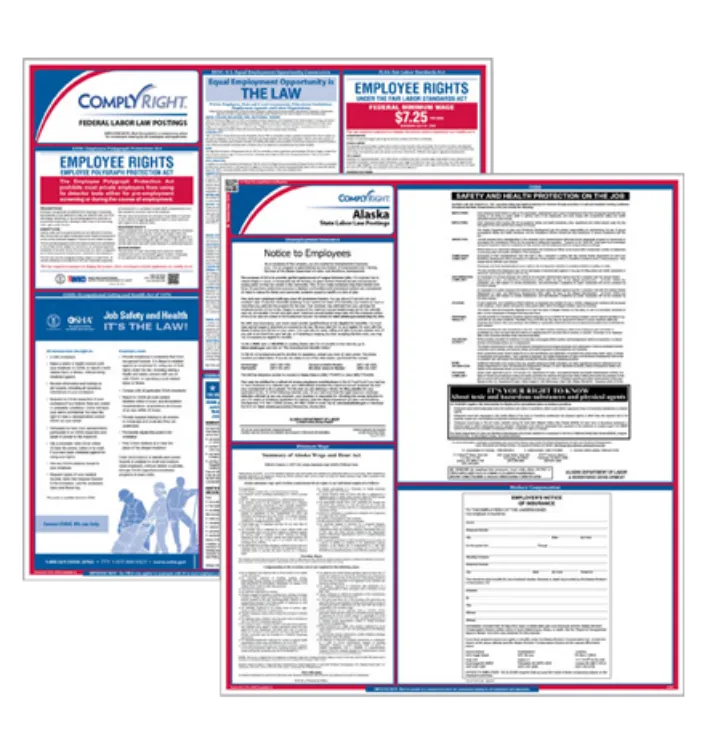
Under federal law, all employers must display up to six workplace postings:
- Equal Employment Opportunity Commission (EEOC) Know Your Rights: Covers anti-discrimination provisions and legally protected characteristics.
- Occupational Safety and Health Administration (OSHA): Highlights important workplace safety measures.
- Family and Medical Leave Act (FMLA): Explains employee leave eligibility and benefits, as well as employer responsibilities. (Generally, only applies to businesses with 50+ employees.)
- Uniformed Services Employment and Reemployment Rights Act (USERRA): Addresses re-employment after military leave, anti-discrimination provisions and health insurance issues.
- Fair Labor Standards Act (FLSA): Notifies employees of the federal minimum wage rate, overtime rules and child labor laws.
- Employee Polygraph Protection Act (EPPA): Describes the rules around lie detector tests in employment — a posting requirement even if you don’t them.
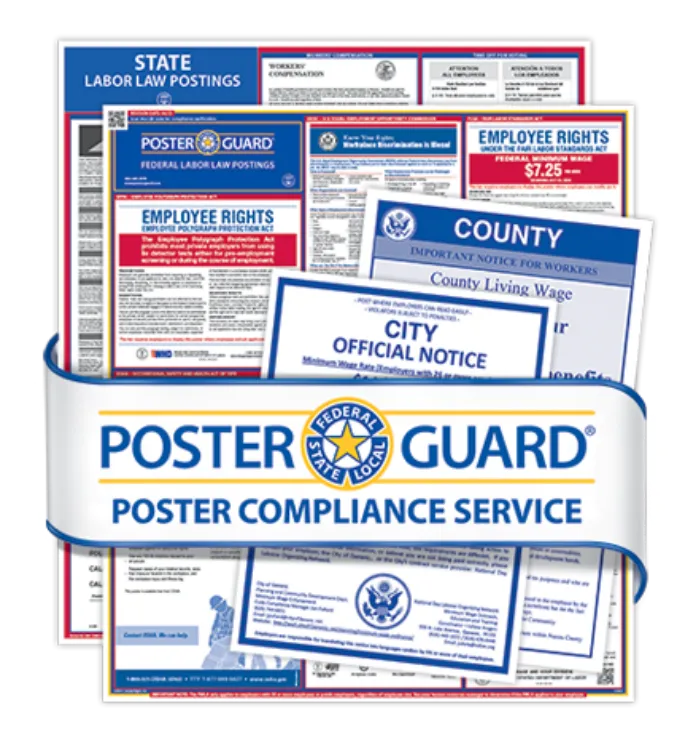
Additional postings are required by each state and, increasingly, by specific counties and cities. These must be displayed prominently where all employees can see them.
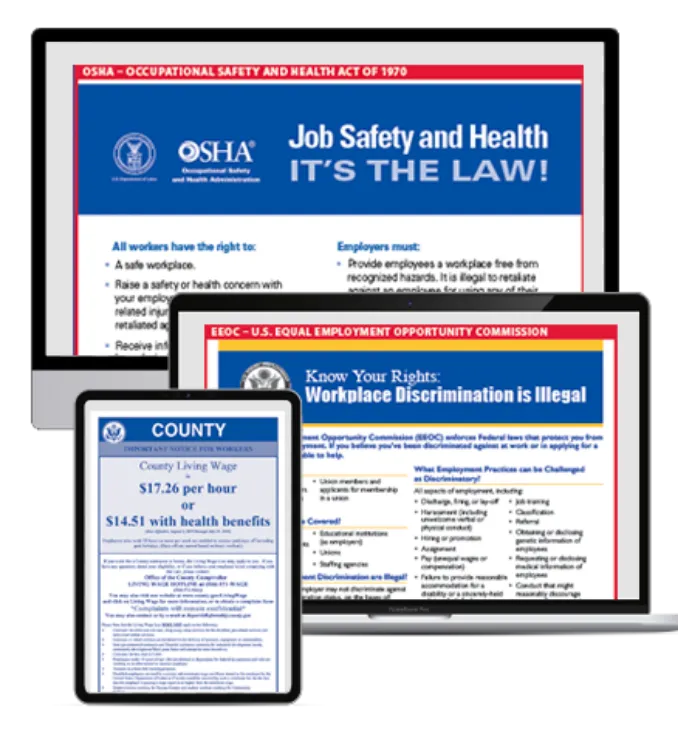
U.S. law requires employers to ensure every employee — including remote workers — has access to mandatory labor law posters. For remote and hybrid workplaces, this means providing digital posters in addition to any physical ones. A fully digital approach is only allowed if all employees work remotely, routinely receive employer information electronically and can easily view those postings.
Posting or notice? Depending on the legal requirements, a posting is displayed continuously in the workplace for all to see while a notice is delivered directly to an individual employee.
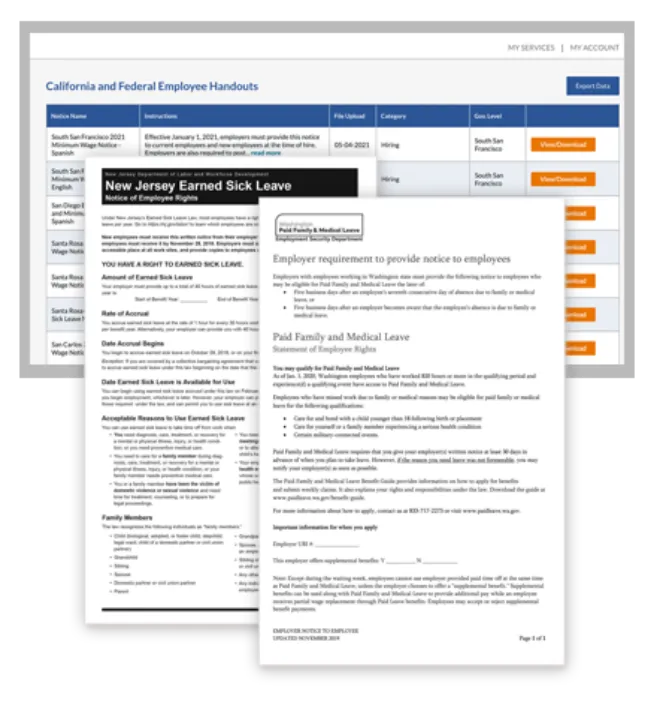
Next Up: Employee Handouts
Maintaining current postings only covers one layer of compliance. Under certain circumstances, employers must also distribute mandatory handouts to employees.
These employee notices are often event-driven — triggered by an employee injury, a leave of absence, a change in pay or employment status, a benefits enrollment period or a separation. When that triggering event occurs, the clock starts, and the responsibility to distribute falls on the employer.
Like postings, employee handouts vary by state, change frequently, must be tracked across multiple agencies and carry real penalties for non-compliance. But because they are individually delivered and often time-sensitive, the consequences of missing one can be more immediate and harder to remedy after the fact.
Managing Multi-Jurisdiction Postings and Notices Is a Big Undertaking
Postings and notices are two separate obligations — but each one also multiplies across jurisdictions. Federal requirements are just the baseline. State governments add their own requirements, and increasingly, so do individual counties and cities. Depending on the location of your business, this could amount to more than 60 posters and handouts to display/distribute.
For example, here is what an employer in Denver, Colorado must provide (beyond the six mandatory federal postings):
| Colorado Posters | Colorado Handouts |
|---|---|
| Minimum Wage | Employer's First Report of Injury |
| Unemployment Insurance | Pregnant Workers Fairness Act |
| Fair Employment | COBRA |
| Payday Notice | Availability of Unemployment Compensation Notice |
| Paid Family and Medical Leave | 2026 Overtime and Minimum Wage Standards Notice (COMPS Order) |
| Workers' Compensation - Report of Injury | Healthy Families and Workplaces Act Notice |
| Paid Leave and Whistleblower | Family and Medical Leave Insurance Program Notice |
| Denver Anti-Discrimination Poster | Earned Income Tax and Child Tax Credits Notice |
| Denver Minimum Wage and Wage Theft Poster |
Denver Minimum Wage and Wage Theft Notice Denver Notice of Right to be Free from Discrimination Because of Pregnancy, Childbirth, and Related Medical Conditions |
Turn to Poster Guard for Attorney-Backed Postings AND Notices
Poster Guard offers dedicated services to eliminate these concerns entirely. Poster Guard® Poster Compliance Service provides 365 days of guaranteed compliance with all required federal, state, county and city labor law postings, Poster Guard® E-Service for Remote Workers delivers required postings electronically to employees who can’t access physical displays at a worksite. And the Mandatory Employee Handouts Service — available in basic and premium levels — gives you immediate online access to all applicable employee notices.
Every service includes year-round legal monitoring and automatic updates whenever requirements change, so you stay covered on both sides of the compliance equation: what must be displayed, and what must be delivered.