Summary: Mandatory employee handouts are legally required notices that U.S. employers must give directly to workers, separate from the labor law posters displayed in the workplace. This article covers six employee handout compliance considerations, from recognizing qualifying events and understanding the legal penalties to accounting for company size and giving proper notice of employee rights, plus a service that keeps your business current year-round.
You're keeping current with all labor law postings impacting your business, so you're fully compliant, right? Not necessarily. Beyond workplace postings, U.S. employers must also distribute notifications directly to employees under specific circumstances. These mandatory employee handouts are often overlooked, which can put your business at risk.
Learn more about the six biggest compliance considerations with these handouts, including a recently expanded service that will keep you current year-round.
1) Not knowing they are mandatory
By law, you must inform employees of their legal rights in certain situations. To be clear: These notifications are not optional. Nationwide, more than 400 employee notices are currently mandated, and that number keeps growing as state, county and city jurisdictions issue their own requirements.
2) Not recognizing qualifying events
The reasons for providing these handouts vary widely. Depending on the underlying law, some notices may be required for all employees, either annually or on some other schedule. Others are event-driven, which means you must distribute them when a specific activity occurs. For example:
- Upon hiring
- Change in pay or status
- Open enrollment
- Requests for leave
- Requests for legally protected time off
- Workplace injuries
- Pregnancy
- Termination or separation
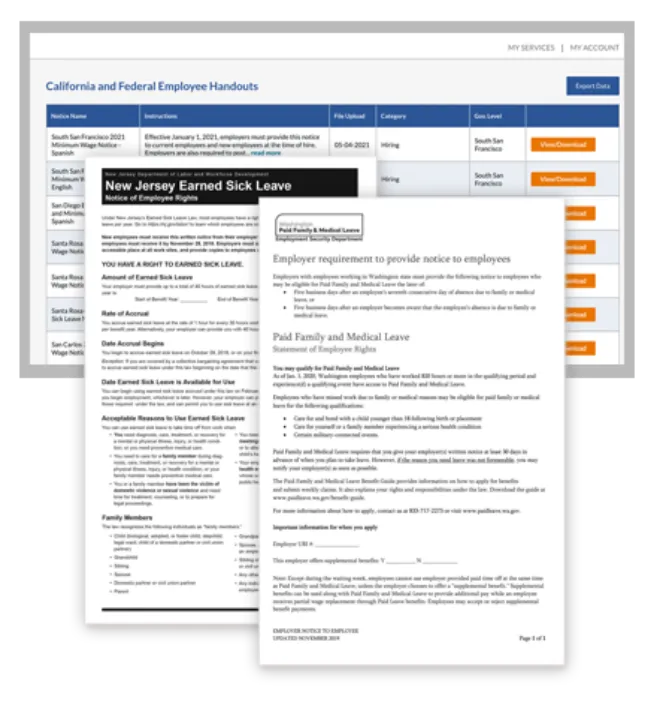
The Mandatory Employee Handout Service is a practical, cost-effective solution to inform your employees of their legal rights and protect your business.
3) Not understanding the legal implications
The penalties for noncompliance with handout regulations can be just as severe as those for labor law postings: more than $26,000 per violation for failing to provide required notices or using outdated ones. On state, county and city levels, the fines typically range from $100–$500 per violation.
While fines can be costly, the bigger danger is employee lawsuits. Under some laws, you can lose certain defenses if you fail to inform employees of their rights. The statute of limitations, for example, limits the timeframe during which an employee can sue an employer for a particular offense. In recent years, courts have increasingly extended that window when an employer did not give proper notice of employee rights. This can also lead to larger judgments simply because notices weren't distributed on time.
4) Not keeping up with the changes
Like postings, these notifications change frequently. In fact, employers can expect as many as 200 changes in just one year. Further complicating the matter is that you're rarely, if ever, notified of these changes. This puts the burden entirely on your business to research and monitor changing requirements.
5) Not accounting for company size and employee count
Newer laws increasingly tie mandatory employee handouts to company size, so your notice requirements can change depending on how many workers you employ. For example:
- The South Carolina Employment Discrimination Notice for employers with 15 or more employees
- The New Jersey Gender Equity Notice for employers with 50 or more employees
- The Hawaii Family and Medical Leave Notice for employers with 100 or more employees
- The California Family Care and Medical Leave Notice for employers with five or more employees
These thresholds make it essential for employers to monitor workforce changes alongside evolving state, county and city employee notice requirements. Even a small change in employee count can trigger new obligations, particularly for businesses operating in multiple jurisdictions.
6) Not exploring support services for compliance
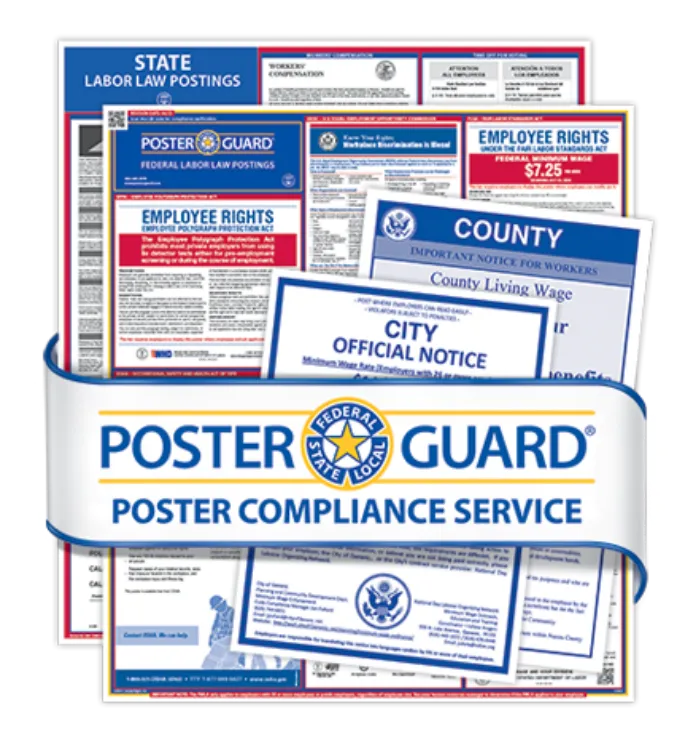
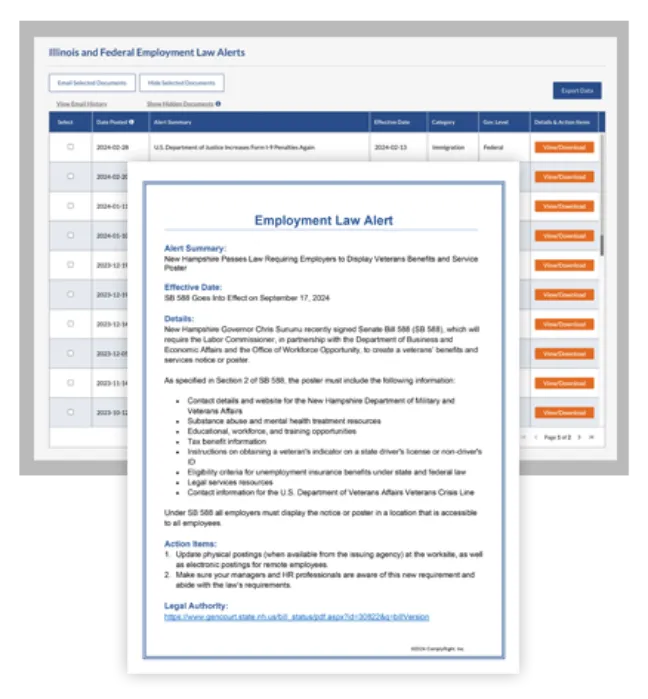
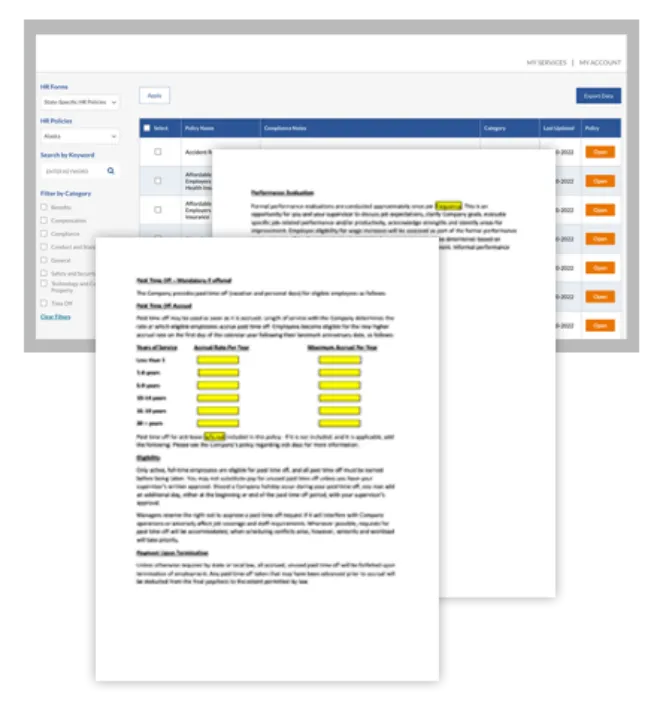
You can easily manage this growing compliance responsibility with the Mandatory Employee Handout Service, developed by the same legal experts behind Poster Guard® Poster Compliance Service. This affordable solution supports year-round compliance. You receive immediate, 24/7 electronic access to all required employee handouts for your business location, as well as practical instruction on when and how to use each notification.
Frequently Asked Questions
What are mandatory employee handouts?
Mandatory employee handouts are legally required notices that employers must provide directly to employees under federal, state, county or local laws. Unlike labor law posters, these notices are distributed to employees when specific events occur or on a scheduled basis.
Are mandatory employee handouts different from labor law posters?
Yes. Labor law posters are displayed in the workplace, while mandatory employee handouts must be delivered directly to employees. Both serve compliance purposes, but handouts often apply to specific employment events such as hiring, leave requests, pay changes or workplace injuries.
When are employers required to provide employee handouts?
Employee handouts may be required at various points, including upon hire, during open enrollment, following a pay change, when an employee requests leave, after a workplace injury, and during pregnancy or accommodation requests.
How many mandatory employee notices are employers required to distribute?
There are more than 400 mandatory employee notices across federal, state, county and local jurisdictions. Requirements vary based on employer location, workforce characteristics and employment events.
What happens if an employer fails to provide required employee notices?
Employers may face government fines, compliance violations, employee complaints and increased legal exposure. Failure to provide required notices can also weaken legal defenses in employment disputes and may lead to extended statutes of limitations.