Search Results
MyPosterGuard.com

Labor Law Updates

Washington Governor Signs Immigrant Worker Protection Act

Washington Governor Bob Ferguson recently signed the Immigrant Worker Protection Act into law (HB 2105). The Act aims to protect immigrant workers by requiring employers to provide notice to their employees when federal agencies conduct inspections related to employment eligibility verification, specifically concerning Form I-9.

Read More
Disability Discrimination Cases Are on the Rise: Is Your ADA Compliance Putting You at Risk?

Disability discrimination is one of the fastest-growing areas of enforcement by the Equal Employment Opportunity Commission (EEOC). In fiscal year 2024, the EEOC received more than 33,688 disability discrimination charges and secured nearly $700 million for victims, a 5% increase over the previous year. 

Read More
Congress Moves to Expand Veterans Benefits Awareness in the Workplace

Veterans are entitled to a wide range of benefits and resources through their service — but accessing those benefits often depends on knowing they exist in the first place.

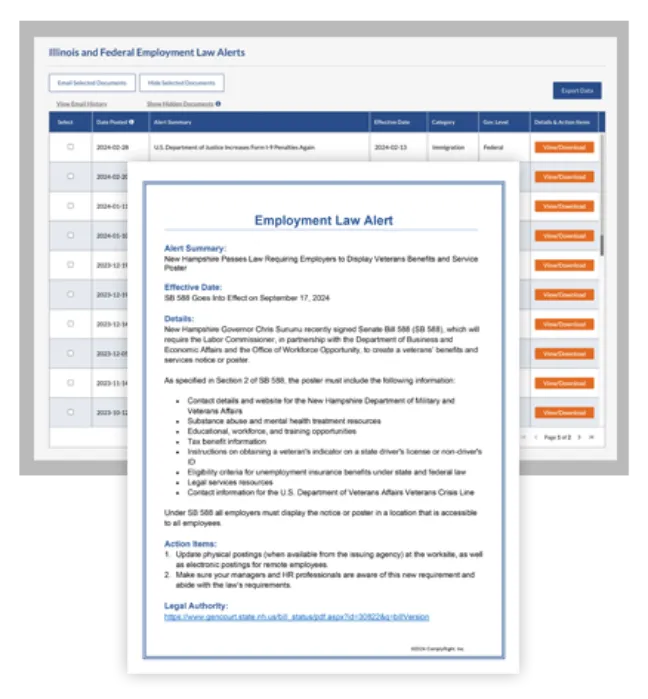
That's the driving idea behind the Thomas M. Conway Veterans Access to Resources in the Workplace Act, a newly introduced bipartisan bill that would require employers to display information connecting veterans with the federal and state benefits available to them.

Read More
OSHA Releases Updated Poster - Employers Do Not Need to Replace Previous Versions

On March 3, 2026 the Occupational Safety and Health Administration (OSHA) has released an updated version of its poster that informs employees of their rights under the Occupational Safety and Health Act of 1970. The new poster has been simplified and reformatted.

OSHA has confirmed, employers are not required to replace existing posters. Current versions remain fully compliant and may continue to be displayed.

Read More
Workers’ Comp for Remote Employees: Compliance Risks and Employer Responsibilities

The workers’ compensation system was created to provide benefits to employees who suffer a work-related injury or illness. As remote and hybrid work arrangements continue to evolve, many employers are surprised to learn that workers’ comp obligations do not stop at the office door. In most cases, remote employees are covered under the same state laws as on-site staff.

Read More

Get Free
Posting Updates

Filters
Sort
display