Summary: Labor law compliance for new businesses begins the moment you hire your first employee. New employers must meet federal, state and local workplace posting requirements, and those obligations differ from one jurisdiction to the next. Posters are only part of the picture, since some laws require mandatory handouts given directly to employees. Outdated notices, hard-to-see posting placement and overlooking remote workers are among the mistakes that put new businesses at risk, which is why keeping postings current and using a poster compliance service helps protect employers year-round.
Starting a business takes more than registering your company and hiring your first employee. The moment you become an employer, new business labor law requirements apply to you, including federal, state and local workplace postings and employee notices. Getting them right from the start is far easier and less expensive than fixing problems after an employee complaint or a regulator comes calling.
This post walks new business owners through what labor law posters cover, why they matter, the mandatory handouts that go beyond postings and the mistakes to avoid.
Why Labor Law Posters Matter for New Businesses
Workplace posters exist to inform employees and job applicants of their rights and protections under the law. They commonly cover employee rights involving:
- Minimum wage and other wage protections
- Workplace safety
- Anti-discrimination protections
- Unemployment insurance
- Workers' compensation
- Family and medical leave, where it applies
- Other federal or state-mandated workplace rights
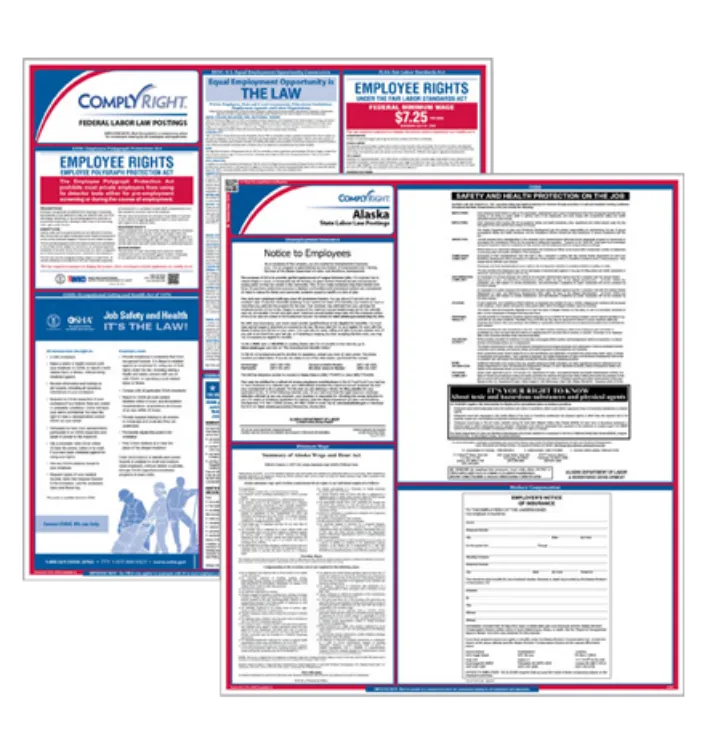
Some of these postings are federal and apply to nearly every employer in the country. Others are state-specific and shift from one jurisdiction to the next. Depending on your city, county, industry or workforce, you may have posting obligations on top of those.
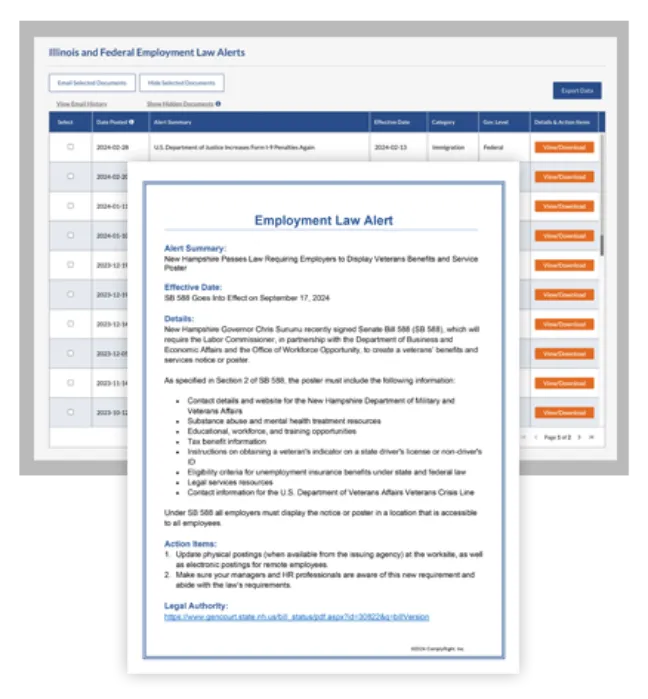
One point new owners often miss is that posting compliance is ongoing, not a one-time task you check off when the doors open. Requirements change as laws and agency information are updated, and your posters must keep pace.
Posters Are Only One Part of Labor Law Compliance
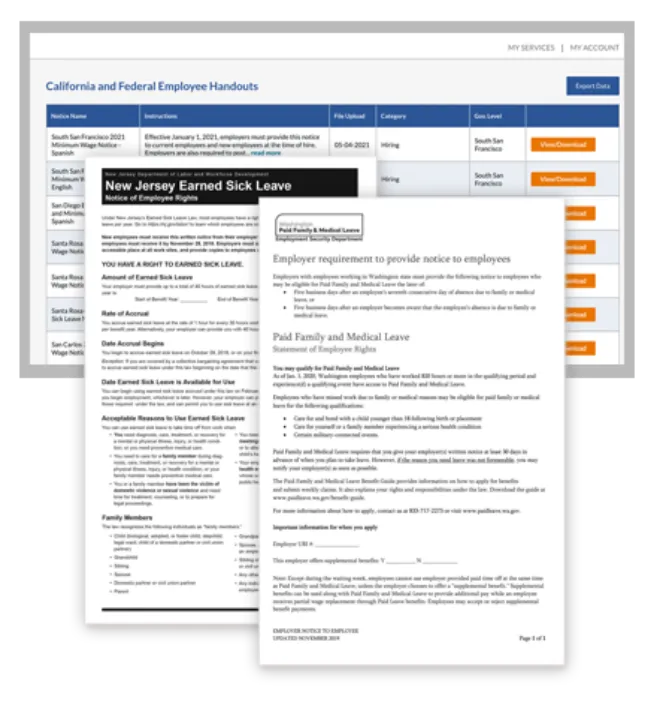
Not every requirement is satisfied by hanging a poster on the wall. Some employment laws require you to give information directly to employees or applicants at specific moments, such as at hire, during a leave request or at separation. These mandatory handouts might include notices about health coverage, wage rates, paid leave or workers' compensation, depending on your state and situation. Because they're distributed rather than displayed, they're easy to overlook, and a missed handout carries the same compliance risk as a missing poster.
Why Going Solo Can Be Risky
Managing all this in-house is doable, but it comes with pitfalls:
- Requirements shift as laws and regulations are updated, sometimes several times a year.
- Less obvious obligations, like a county ordinance or an industry-specific notice, are easy to miss.
- Outdated or incorrect postings create the same exposure as having none.
- Tracking it yourself pulls time and attention away from running the business.
Posting compliance isn't a one-time task. Federal, state and local requirements change throughout the year, and your workplace posters must change with them.
The Cost of Noncompliance
Labor law violations can carry government fines and penalties, and the amounts climb when multiple postings, notices or employees are involved. A missing posting or notice can also open the door to employee complaints, agency investigations or added scrutiny. Beyond the direct costs, compliance gaps create operational headaches and can damage your reputation with the people you're trying to hire.
Common Posting Mistakes New Businesses Make
A few posting missteps show up repeatedly among businesses in their first year:
- Assuming one poster covers everything. There's no single universal poster. Most employers need a set of federal, state and local postings, and the exact mix depends on where and how you operate.
- Using an outdated poster. Posters go out of date when laws, agency information, minimum wage rates or employee rights change. A poster that was current at launch may not be a year later.
- Placing posters where employees can't easily see them. Postings have to be displayed where employees can readily view them. A back office, a private owner's workspace or a spot employees rarely pass doesn't meet that expectation.
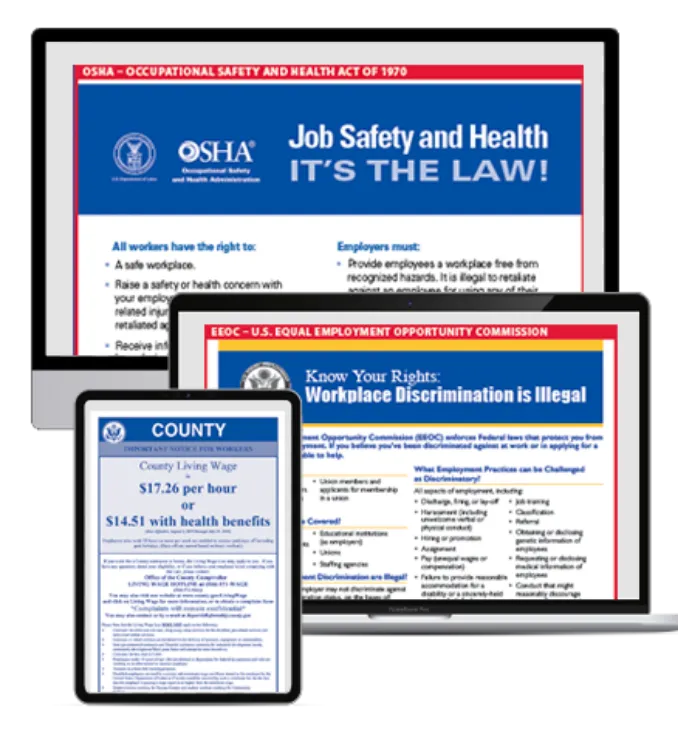
- Forgetting about remote or hybrid workers. If you have employees working from home, check whether required postings must be provided electronically or otherwise made accessible to them.
Posting Compliance Best Practices for New Businesses
Building a few simple habits early keeps posting compliance manageable as you grow. It's important to:
- Identify every location where employees work. Include your main office, additional worksites and remote employees.
- Confirm which federal, state and local postings apply. Don't assume the requirements are identical from one location to the next.
- Check for updates on a schedule. Set a recurring review rather than waiting for an employee or regulator to spot an outdated notice.
- Have a process for replacing outdated postings. Give a specific person or team responsibility for it.
- Reassess when the business changes. Hiring in a new state, opening another location, shifting to remote work or entering a new industry can all trigger new requirements.
Build Compliance Into Your Business from Day One
Labor law posting compliance is a small part of running a business, yet overlooking it creates risk you don't need to carry. The good news is you don't have to manage it alone.
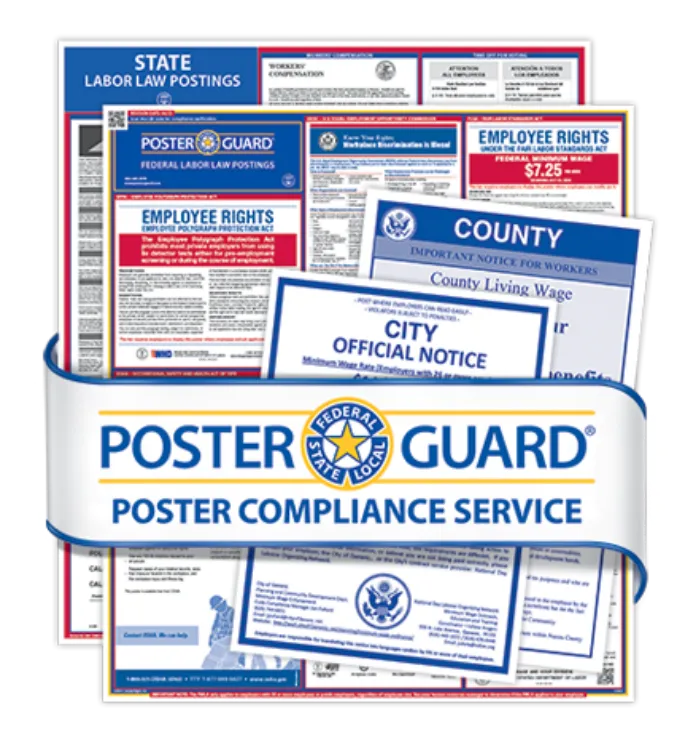
Poster Guard® Poster Compliance Service gives you a full, up-to-date set of federal, state and local posters when you enroll, plus free, automatic replacements every time a mandatory change occurs during your service term. The Mandatory Employee Handout Service covers the notices you're required to distribute to employees, so this added compliance responsibility is handled as well.