For many employees, hair is more than style – it’s identity. Across the country, states continue to adopt laws that prohibit race-based hair discrimination in the workplace, signaling a broader shift in how employers must approach grooming policies and inclusion.
Here’s what you need to know about evolving CROWN Act legislation and its effort to address bias against natural hairstyles.
Which States Ban Natural Hair Discrimination?
Protections against hair discrimination in the workplace have expanded significantly in recent years, with more states recognizing that policies restricting natural hairstyles can unfairly target individuals based on race. These laws address workplace standards that have historically limited styles such as locs, cornrows, twists, braids and Bantu knots —styles closely tied to cultural identity.
California led the way in July 2019, becoming the first state to pass the CROWN — Creating a Respectful and Open World for Natural Hair — Act. The law acknowledges that workplace restrictions on natural hair can have a disparate impact on Black individuals, creating barriers in hiring and employment.
Soon after, New York followed with its own legislation prohibiting hair discrimination in the workplace. Drawing on guidance from the New York City Commission on Human Rights, the law affirms that natural hairstyles are an inherent part of racial identity and are therefore protected.
Natural hair discrimination laws now cover more than half the U.S. If you haven't reviewed your grooming policies lately, now is the time.
Since then, what began as a single-state effort has grown into a broader legislative trend. While no federal law currently addresses hair discrimination in the workplace, 26 states beyond California and New York have enacted CROWN-related legislation:
- Alaska (only applies to educational discrimination in schools)
- Arkansas
- Colorado
- Connecticut
- Delaware
- Illinois
- Louisiana
- Maine
- Maryland
- Massachusetts
- Michigan
- Minnesota
- Missouri (only applies to educational discrimination in schools)
- Nebraska
- Nevada
- New Hampshire
- New Jersey
- New Mexico
- Oregon
- Pennsylvania
- Rhode Island
- Tennessee
- Texas
- Vermont
- Virginia
- Washington
If your state isn’t on this list, you’ll want to pay attention. The issue is gaining momentum across the nation, with legislation pending in a handful of additional states:
- Arizona (2023 executive order prohibits discrimination by state agencies and contractors)
- Florida
- Georgia
- Kansas
- Kentucky
- Mississippi
- North Carolina
- Ohio
- South Carolina
- Utah
- Wisconsin
Other Appearance-Related Considerations Affecting Workplace Policies
What about other appearance-related matters beyond natural hairstyles? What are the legal boundaries with grooming, dress codes or even religious attire?
Basically, you should steer clear of any grooming or clothing policy that could discriminate against a protected class of employees, whether explicitly or through disparate impact. In New York, for example, the Human Rights Law includes anti-discrimination protections for an employee’s religious clothing, facial hair or attire. These protections extend to turbans, headscarves, hijabs, burqas, yarmulkes and beards worn for religious purposes.
In your own workplace, take note of any policies regarding:
- Shaving — Requiring employees to be clean-shaven could be problematic, especially as it relates to providing reasonable accommodations for religious purposes. If an individual were to challenge your no-beard policy, you’d have to prove the policy is job-related and a business necessity.
- Different clothing for men and women — Requiring employees of only one gender to wear uniforms or follow a dress code could be a legal violation. Dress codes must apply to both men and women equally; further, they should relate to the job and be reasonable.
How Can Employers Address Health and Safety Concerns Related to Hairstyles?
Depending on the nature of your business, you may feel you have valid health and safety concerns related to hairstyles. Under these developing state bans, however, you should always address such concerns through nondiscriminatory measures. Rather than request a hairstyle change, for example, you can require hairnets, hair ties or other accommodations. Other smart practices include:
- Reviewing your employee handbook, specifically grooming policies, to strike any language discouraging natural hairstyles
- Training staff on how to properly communicate with employees, handle accommodation requests and prevent harmful attitudes from influencing employment decisions
- Being mindful of implicit bias in hiring and promotion, particularly the notion that people of color with natural hair are less “professional”
More than 20 states now ban discrimination related to natural hair texture and hairstyles under CROWN legislation.
Keep Policies Current with the Times
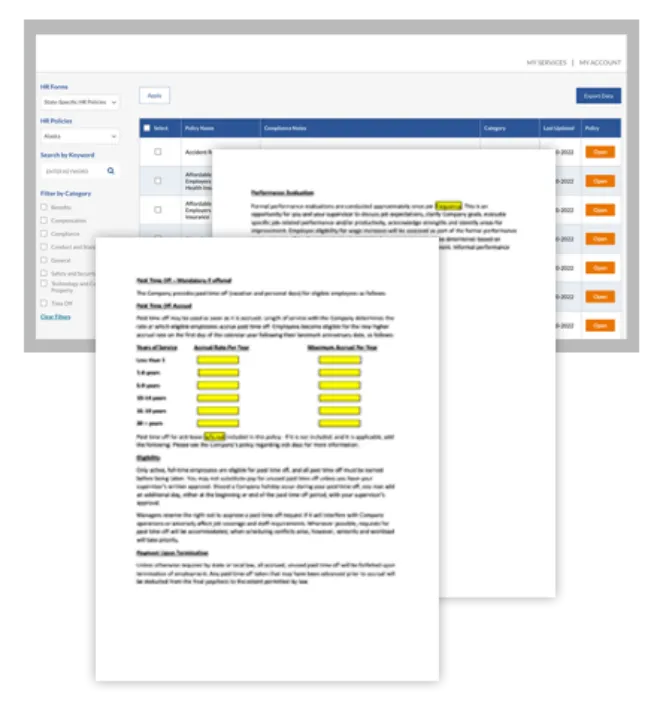
As more states adopt CROWN-related protections, keeping workplace policies aligned with current requirements is essential. A proactive review of grooming standards can help reduce risk and support a more inclusive environment. Resources like the State-Specific HR Policies Library make it easier to access, update and implement compliant policies across your organization.