FMLA Poster Requirements Every Covered Employer Should Know
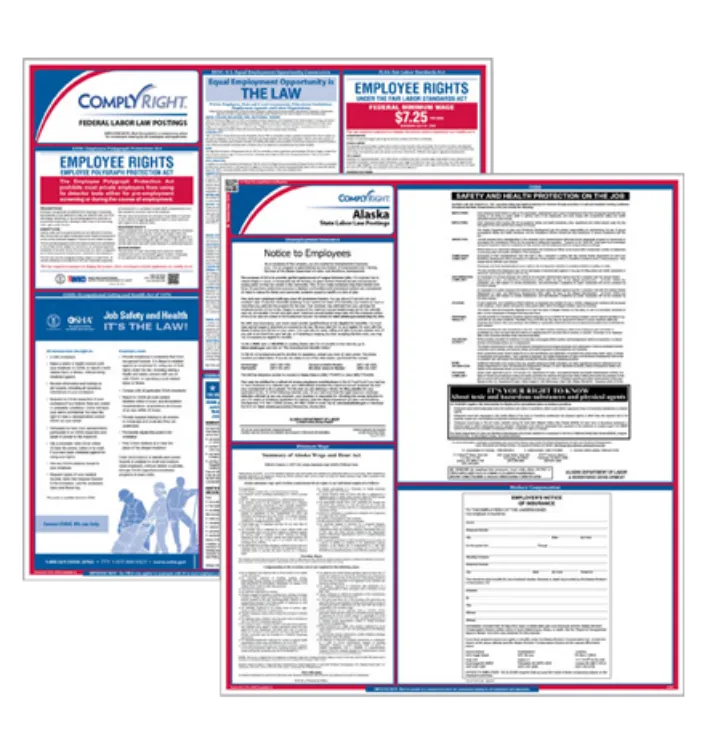
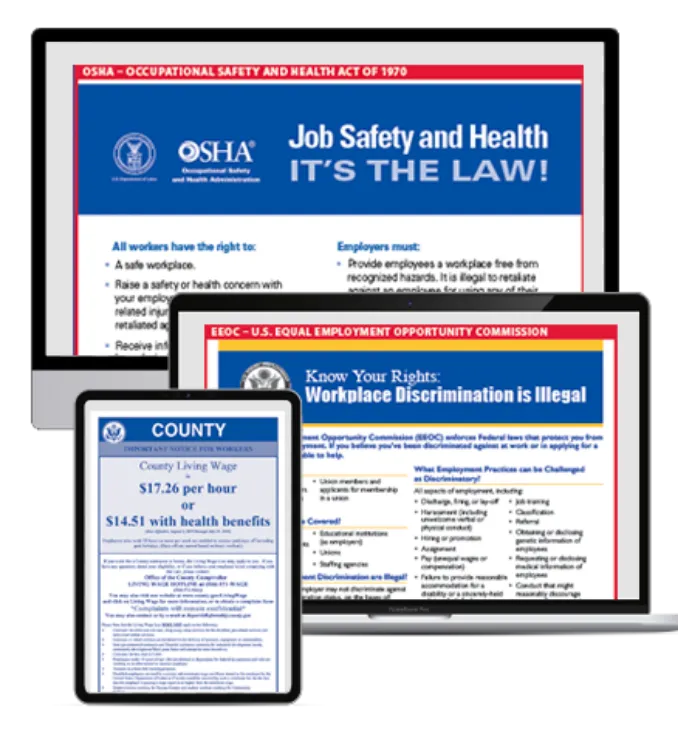
Most U.S. employers must display up to six federal labor law posters in an area where employees and job applicants can easily see them. One of those six is the Family and Medical Leave Act (FMLA) poster.
The FMLA poster summarizes the major provisions of the federal employee leave law and explains how workers can file a complaint. FMLA poster requirements apply to every private employer with 50 or more employees, along with all public agencies and public and private schools, regardless of workforce size.
Understanding the FMLA
Passed in 1993, the FMLA established the family medical leave rights that eligible workers rely on today, letting them take reasonable unpaid leave for certain family and medical reasons. The law is meant to "balance the demands of the workplace with the needs of families, to promote the stability and economic security of families, and to promote national interests in preserving family integrity." Put simply, it helps employees handle serious family and health situations without risking their jobs or benefits.
The FMLA applies to any private company with 50 or more employees on the payroll (including part-timers and those on leave) during 20 or more workweeks, not necessarily consecutive, in the current or preceding calendar year. It also applies to public agencies at the federal, state and local level and to public and private elementary and secondary schools, no matter how many people they employ.
Once you're a covered employer, an employee becomes eligible for FMLA leave after working for you for at least 12 months and at least 1,250 hours. The employee must also work at a site with 50 or more employees within a 75-mile radius.
You must grant an eligible employee up to 12 weeks of unpaid, job-protected leave in a 12-month period for any of the following reasons:
- The birth of a child, or placement of a child for adoption or foster care
- Bonding with a child, taken within one year of the child's birth or placement
- Caring for a spouse, child or parent with a qualifying serious health condition
- The employee’s own qualifying serious health condition that prevents them from doing their job
- Qualifying needs tied to the foreign deployment of a spouse, child or parent in the military
An eligible employee who is the spouse, child, parent or next of kin of a covered service member may take up to 26 weeks of leave in a single 12-month period to care for that service member's serious injury or illness.
Labor law postings are an important line of defense against government fines and employee lawsuits. The FMLA states that failure to follow the notice requirements “may constitute an interference with, restraint or denial of the exercise of an employee’s FMLA rights.”
About the FMLA Poster
The FMLA poster, issued and enforced by the U.S. Department of Labor (DOL), is titled “Employee Rights Under the Family and Medical Leave Act.” It covers:
- Leave entitlements
- Benefits & protections
- Eligibility requirements
- Requesting leave
- Employer responsibilities
- Enforcement
Display the poster in plain view where all employees and job applicants can readily see it. If a significant portion of your workforce cannot read English, you must provide the poster in a language they can read and write. (The law does not define "significant portion.")
Beyond displaying the poster, you must give an employee written notice of their rights within five business days of a leave request. You must then allow at least 15 calendar days for the employee to return a completed certification form. Within five business days of receiving it, you must provide a designation notice stating whether the request is approved.
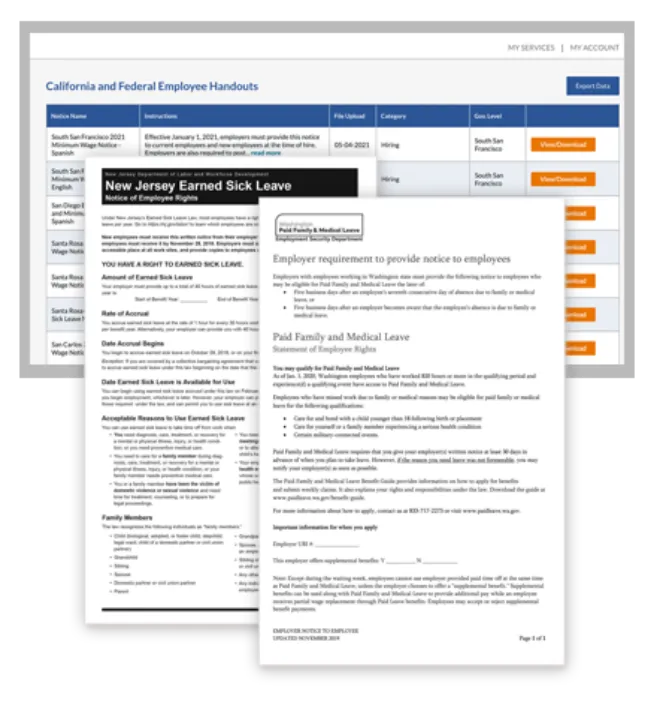
You're also required to provide the FMLA general notice to all employees, either in an employee handbook or by distributing it to employees at hire.
How to Satisfy Your FMLA Posting Responsibilities
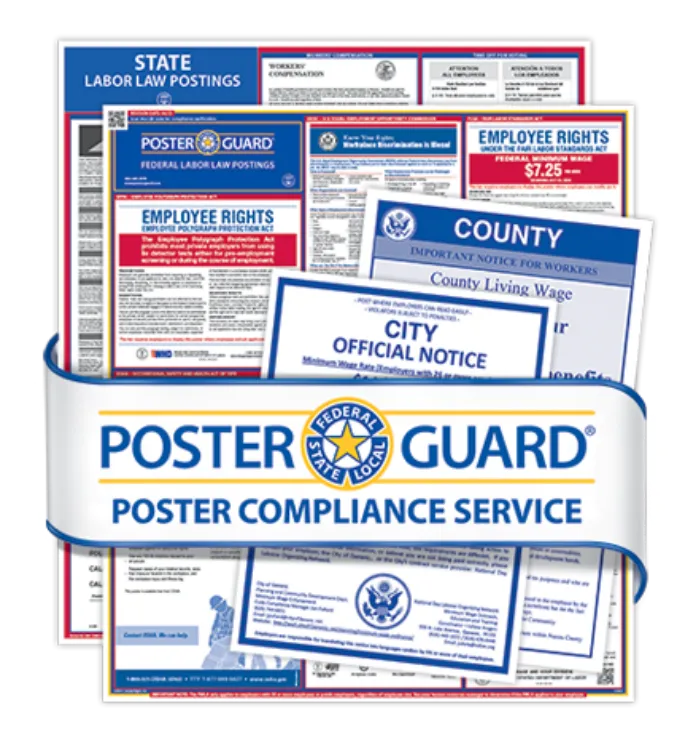
Poster Guard® Poster Compliance Service includes a current FMLA poster among the full set of federal, state, county and city posters. Even if you’re an employer with fewer than 50 employees, it’s a sound business practice to display this posting in your workplace, since it clearly explains employee eligibility, including situations where it does not apply. Plus, you’ll be covered if your business grows beyond 50 employees, at which point you’ll be required to display it.