Disability discrimination is one of the fastest-growing areas of enforcement by the Equal Employment Opportunity Commission (EEOC). In fiscal year 2024, the EEOC received more than 33,688 disability discrimination charges and secured nearly $700 million for victims, a 5% increase over the previous year.
The message for employers is clear: ADA compliance is critical, and the consequences of falling short goes beyond fines and settlements. Reputational damage can be just as costly.
The ADA Violations That Catch Employers Off Guard
Many ADA violations stem from situations employers didn’t see coming — a mishandled accommodation request, an offhand comment or a hiring decision made for the wrong reasons. Understanding the following risks is the first step to avoiding them:
- Refusing to Hire
Choosing not to hire a qualified applicant because of a disability — whether than means turning way a candidate who uses a wheelchair or disqualifying someone after they disclose a condition — is a clear ADA violation. Employers are also prohibited from asking disability-related questions or requiring medical exams before a conditional job offer is made — a rule that’s easily overlooked during interviews.
- Firing or Demoting Due to Disability
Terminating or demoting an employee because their disability requires accommodations or time off is illegal. Always make a genuine effort to find workable accommodations, provided the employee is still qualified to perform the essential functions of the job.
- Ignoring or Delaying Accommodation Requests
When an employee requests an accommodation (including the use of assistive technology), you must engage in an interactive process to find an appropriate solution. Disregarding the request or letting it stall without resolution can expose your business to a discrimination claim, even if no final decision was ever made.
- Blocking Career Advancement
Employees with disabilities are entitled to the same career opportunities as anyone else. Steering them toward less desirable assignments or quietly passing them over for promotions based on disability can lead to claims, even when the intent wasn’t discriminatory.
- Harassing an Employee Based on Disability
Harassment doesn’t have to be overt to violate the ADA. Derogatory comments, exclusionary behavior or a pattern of making an employee feel targeted — whether it comes from other employees or management — can constitute “hostile work environment” harassment when it’s severe or pervasive.
ADA compliance is not optional. Failing to provide reasonable accommodations or retaliating against employees for asserting their rights under the ADA can lead to significant financial and reputational damage.
When ADA Violations Become Costly: Recent Disability Discrimination Cases
The violations outlined above aren't hypothetical — they play out in courtrooms and settlement agreements every year. These recent cases show just how quickly an unresolved accommodation request or a poorly handled employment decision can translate into significant financial and reputational damage.
- Geisinger Health, a Pennsylvania-based health care system, agreed to pay $450,000 in February 2026 to settle an EEOC disability discrimination and retaliation lawsuit after the agency found the company denied employees with disabilities reasonable accommodations under the ADA, including job-protected leave and non-competitive reassignment
- Peak Performers, an Austin-based staffing agency, resolved an EEOC disability discrimination lawsuit for $160,000 in January 2026 after the agency found the company denied a brief unpaid medical leave request to an employee with mental health-related disabilities and terminated her instead
- 1st Franklin Financial Corporation, a consumer lender with more than 370 branches across the Southeastern United States, paid $750,000 in December 2025 to resolve an EEOC disability discrimination lawsuit after the agency found the company denied reasonable accommodations to employees with disabilities and terminated those whose requests were refused
- Jewel-Osco, an Illinois-based regional grocery and drug store chain operating 189 stores across the Chicago area, Iowa, and Indiana, reached a $1.95 million settlement in September 2025 to resolve an EEOC investigation into the denial of reasonable accommodations to employees with disabilities
- Elon Property Management LLC, a residential property management company operating across several states, settled an EEOC disability discrimination and retaliation lawsuit for $200,000 in September 2025 after the agency found the company retaliated against a disabled employee returning from medical leave and screened out workers with disabilities by requiring a full-duty release before allowing employees to return to work
- Western Distributing Co., a national trucking conglomerate of at least 15 companies based in Colorado, was ordered to pay $919,000 in July 2025 following an EEOC disability discrimination lawsuit finding that the company enforced rigid full-duty and inflexible leave policies that resulted in the termination of employees with disabilities without consideration of reasonable accommodations
Combined, these six cases resulted in more than $4.4 million in settlements — a stark reminder that ADA non-compliance carries real consequences.
How to Protect Your Business from Disability Discrimination Charges
ADA compliance isn’t a one-time checklist — it’s an ongoing commitment. These best practices can help reduce your legal risk and foster a more inclusive workplace.
- Put it in writing — and make sure employees actually see it. A strong anti-discrimination policy covers prohibited conduct, outlines how employees can report concerns and explains how complaints will be investigated. Make the policy easy to find, reference it during onboarding and revisit it with your team regularly.
- Don't just train once and forget it. One-time training fades fast. Managers and supervisors in particular need refreshers as laws evolve and workplace situations change. Regular training helps ensure that accommodation requests are handled correctly from the start — before a misstep becomes a lawsuit.
- When a complaint comes in, act quickly. That means acknowledging it within 24–48 hours, not weeks later. A prompt, thorough investigation shows good faith and can prevent a manageable situation from escalating into a formal EEOC charge.
- Review your policy at least once a year — and whenever EEOC guidance changes. Set a recurring calendar reminder. If the EEOC updates its enforcement priorities or new case law emerges, your policy should reflect it. An outdated policy offers little protection when you need it most.
Don't Let a Missing Poster Make a Bad Situation Worse
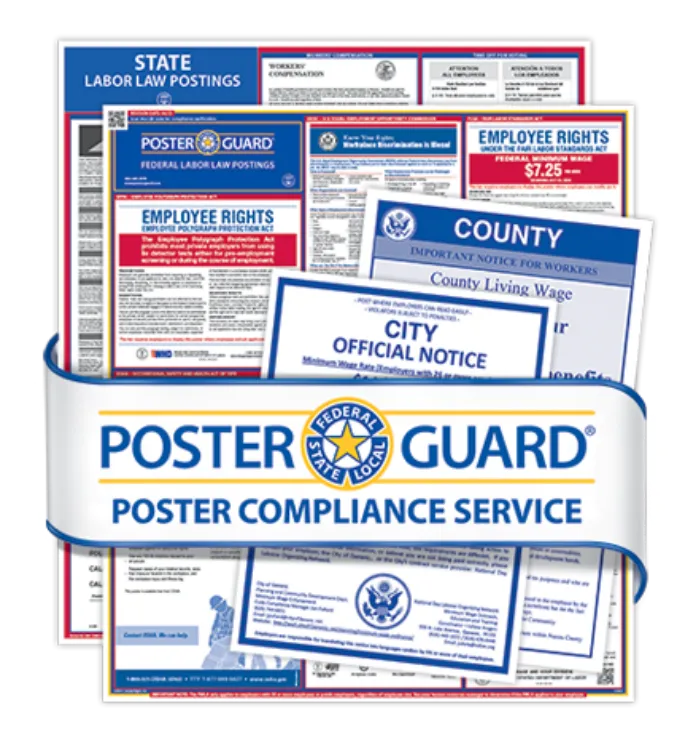
Staying compliant goes beyond policies and training — it also means keeping up with required workplace postings. During EEOC investigations, auditors often flag missing or outdated labor law posters, compounding an already difficult situation. With Poster Guard® Poster Compliance Service, you can easily keep current with required postings and demonstrate good faith compliance with federal, state and local regulations.