The federal minimum wage hasn't changed since July 2009. That 17-year stretch at $7.25 an hour is now the longest freeze in the law's history. The state and local picture is a different story entirely, with rates changing every year. To stay compliant, you must track the latest rates, pay the most generous rate to affected workers and display all applicable federal, state and local postings.
Here are answers to frequently asked questions about minimum wage compliance:
What is the purpose of the federal minimum wage?
Basically, the minimum wage is the lowest allowable rate of pay for employees under the Fair Labor Standards Act (FLSA). Its purpose is to create a fair base pay rate for employees and protect them from economic shifts. The federal minimum wage does not increase automatically. Rather, Congress must pass a bill and the President sign it into law for a rate boost.
How are state and local minimum wages determined?
While every state, county and city sets rates through its own legislation, the Consumer Price Index (CPI) plays a big role in most of them. The CPI is a measurement of the average change in prices paid for a collection of consumer goods and services, such as transportation, food and medical care. For government agencies, the CPI can act as a solid indicator of where prices are going, as well as how much a dollar of income will purchase. (Similarly, employers may use the CPI as a benchmark for determining annual cost-of-living adjustments.)
How has the federal minimum wage changed historically?
The first attempt at a federal minimum wage was in 1933 as part of President Franklin D. Roosevelt’s New Deal. But two years later, the U.S. Supreme Court declared the minimum wage unconstitutional and abolished it. It wasn’t until 1938 that an official minimum wage was enacted, when President Roosevelt signed the FLSA into law. This legislation created a wage of 25¢ /hour to maintain a “minimum standard of living necessary for health, efficiency and general well-being.”
Further developments through the years included:
- 1949 – minimum wage nearly doubles from 40¢ to 75¢//hour
- 1961 – coverage expands to the retail trade industry
- 1960 – a milestone year when the minimum wage achieves its peak buying power at $1.60/hour
- 1977 – new amendments eliminate the separate (and lower) minimum wage for large agricultural employers, establishing a uniform minimum wage for all covered workers
- 1981-1990 – minimum wage remains at $3.35/hour, a record-setting wage freeze for the time
- 1997-2007 – minimum wage remains at $5.15/hour, breaking the previous wage freeze record
- 2009 – minimum wage increases to $7.25/hour in the last of three incremental raises under the Fair Minimum Wage Act of 2007
- 2014 – President Obama signs an executive order raising the minimum wage for federal contractors to $10.10/hour
- 2023 – 30 states plus D.C. have higher rates than federal law; certain federal contractors must pay workers $16.20/hour
- 2024 – 22 states increase their minimum wage on January 1, 2024 and certain federal contractors must pay workers $17.20/hour
- 2025 – EO 14026 (the Biden-era contractor minimum wage, which had reached $17.75/hour) is revoked; EO 13658 still governs older contracts, with a rate of $13.65/hour as of 2026
Are there any exceptions to paying the minimum wage?
Minimum wage exceptions only apply under specific circumstances. These exceptions cover workers with disabilities, full-time students, youth under age 20 in their first 90 consecutive calendar days of employment, tipped employees and student learners.
Who enforces the minimum wage?
The Department of Labor (DOL) Wage and Hour Division administers and enforces the federal minimum wage law.
How often do state and local minimum wages change?
We are witnessing a steady trend of state and local legislators enacting higher minimum wages than the federal rate, typically at the first of the year or mid-year. Effective January 1, 2026, 19 states raised their minimum wages, with Washington leading all states at $17.13/hour. Alaska, Oregon and Washington, D.C. raised their rates again on July 1, 2026, with D.C. now the nation's highest at $18.40/hour. Currently, 30 states and D.C. have higher minimum wages than federal law. We expect more increases in 2027.
What if rates vary at the federal, state and local levels?
The key factor regarding the web of minimum wages is that when the federal, state or local rates vary, you’re legally required to pay the most generous rate to nonexempt employees.
What about workplace postings?
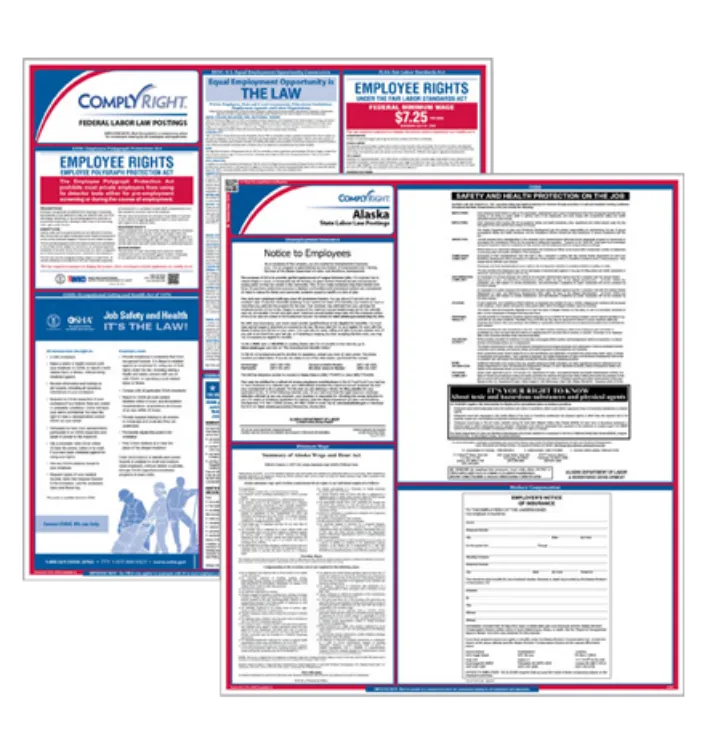
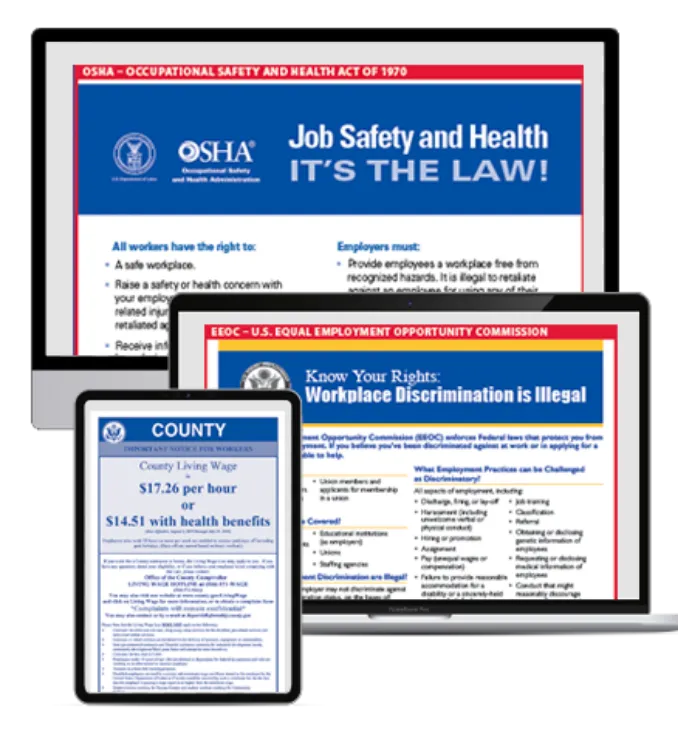
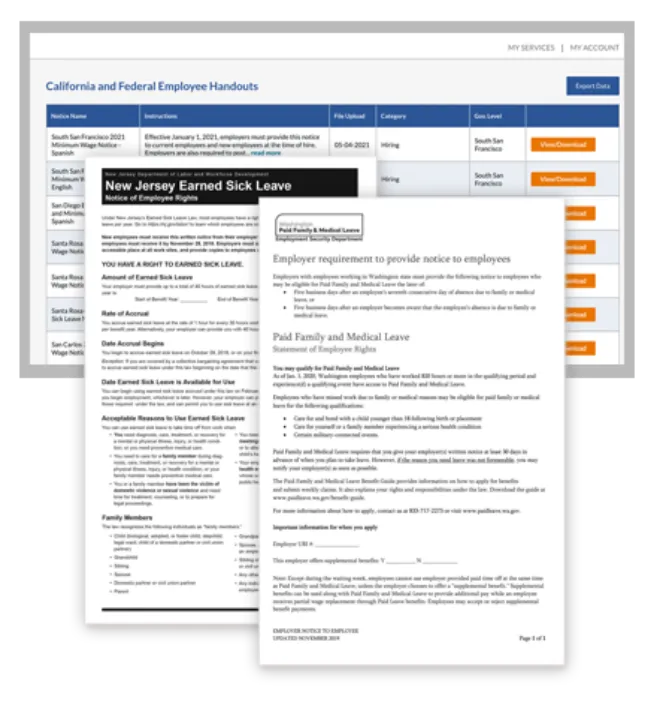
You’re at risk of non-compliance if your workplace labor law postings don’t reflect the latest minimum wage increases. You must post a current FLSA/Federal Minimum Wage poster where all employees can see it, as well as state and local postings for any areas with higher minimum wages than the federal rate.
What’s the easiest way to keep up with changing rates?
The Minimum Wage Monitor™ Premium Service tracks current, past and future minimum wage rates by state, county and city for all 50 states, plus D.C. and Puerto Rico. An interactive, color-coded map displays real-time data maintained by our in-house legal team, and automated email alerts notify you whenever a minimum wage law passes or changes.
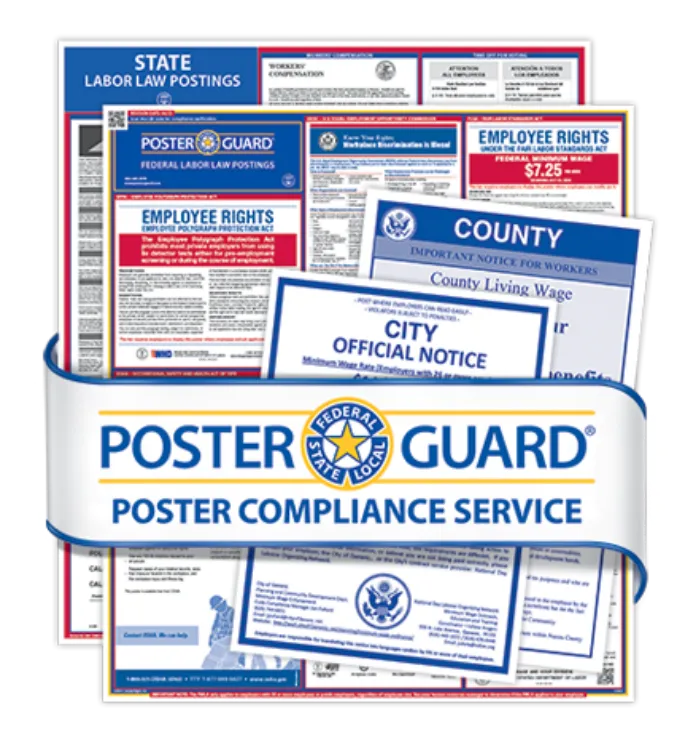
For your posting requirements, Poster Guard® Poster Compliance Service keeps your business compliant with federal, state and local posting laws (including the mandatory FLSA/Federal Minimum Wage poster) for one annual fee. You'll receive a complete poster set upon enrollment, plus automatic replacements any time a mandatory change occurs. Every posting is backed by our expert legal team and guaranteed for a full 12 months.